Simple interest formula
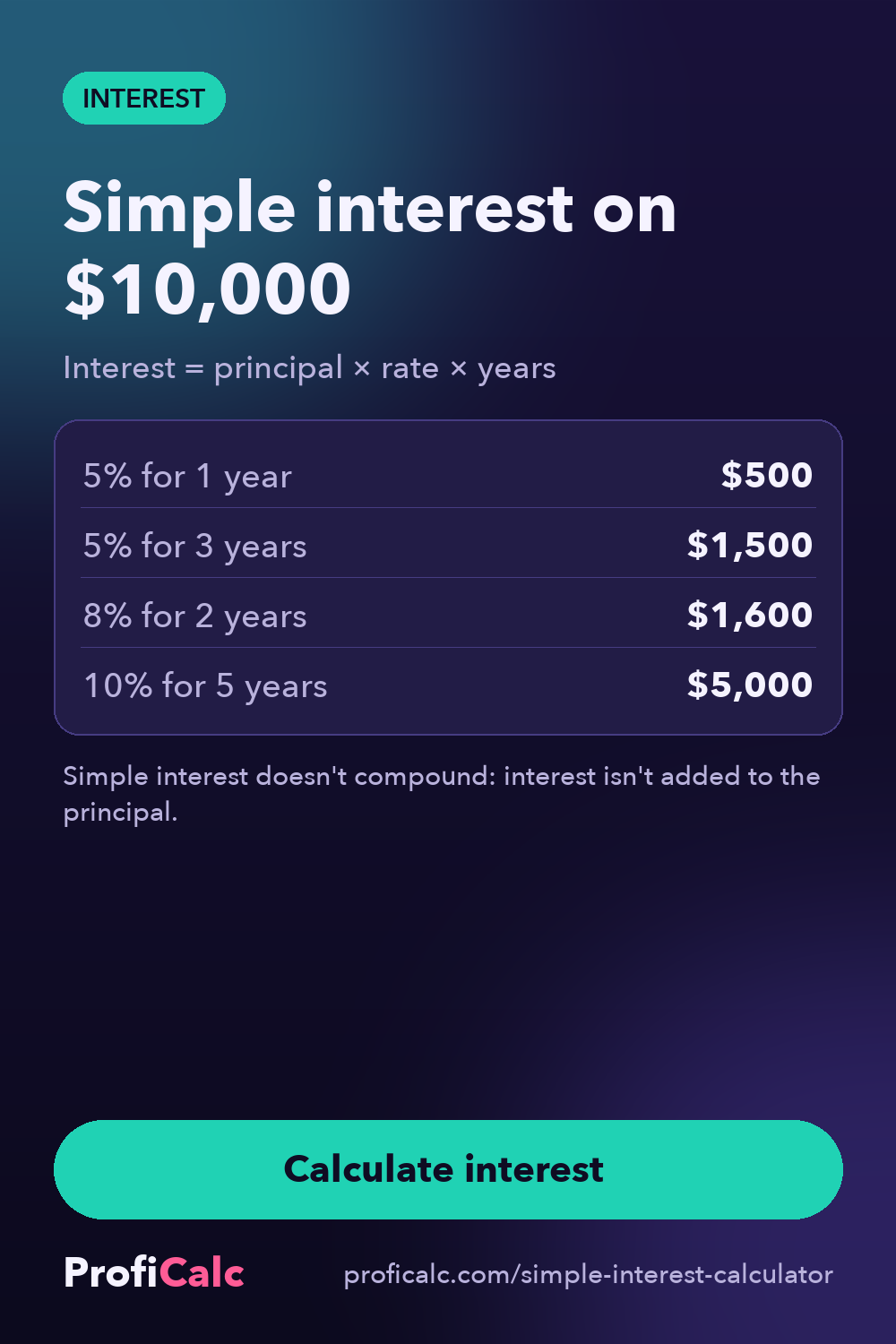
I = P × R × T, where P is the principal, R is the annual rate as a decimal and T is the time in years. 10,000 at 5% for 3 years earns 10,000 × 0.05 × 3 = 1,500.
Simple vs. compound interest
Simple interest is only ever calculated on the original amount. Compound interest is also charged on interest already added, so it grows faster over time. Many short-term loans, car loans and some bonds use simple interest, while savings accounts and credit cards usually compound. See the compound interest calculator to compare.
Examples
- 5% interest on 10,000 for 1 year: 500 (about 41.67 a month)
- 5% on 10,000 for 3 years: 1,500, so 11,500 in total
- 8% on a 20,000 loan for 5 years: 8,000, so 28,000 to repay
- 0.75% on 50,000 for 1 year: 375
- 6% on 5,000 for 90 days: 5,000 × 0.06 × 90 ÷ 365 = 73.97
Ordinary vs. exact simple interest
When time is counted in days, exact interest divides by 365 days a year and ordinary interest (the “banker's rule”) divides by 360. Ordinary interest gives a slightly higher figure: 6% on 5,000 for 90 days is 75.00 instead of 73.97. This calculator uses 365 days; to get ordinary interest, multiply the result by 365 ÷ 360.
Simple interest on a loan
With a simple interest loan, the total to repay is the principal plus P × R × T, so a monthly payment is that total divided by the number of months. Most mortgages and many personal loans are amortized instead, where interest is charged on the remaining balance; use the loan calculator for those.
Frequently asked questions
What is 5% interest on 10,000?
500 a year with simple interest. Over 3 years that's 1,500, for 11,500 in total.
What is ordinary interest?
Simple interest that uses a 360-day year instead of 365. It's sometimes called the banker's rule and gives a slightly higher result.
How do I calculate simple interest for months?
Divide the number of months by 12 to convert to years, then use I = P × R × T.
Is simple interest better for borrowers?
Usually, yes. With the same rate, simple interest costs less than compound interest because you never pay interest on interest.